Zucchini Companion Plants: The Secret to Naturally Deterring Pests and Exploding Your Harvest
There is a specific kind of heartbreak known only to gardeners. It usually happens on a humid Tuesday morning in July. You walk out to your vegetable patch, coffee mug in hand, expecting to see those broad, cheerful green leaves reaching for the sun. You are already mentally planning the zucchini bread and grilled squash you’ll make later.
Instead, you find devastation. The leaves are slumped against the dirt, wilted and lifeless, as if someone unplugged them. You inspect the base of the stem and see it: the tell-tale sawdust “frass” of the Squash Vine Borer.
It feels personal. You nurtured that plant from a seed, protected it from frost, and watered it faithfully, only to lose it just as the first yellow blossoms appeared. It is enough to make you want to throw in the trowel.
But what if I told you that the best pesticide isn’t found in a plastic bottle at the hardware store? It’s found in nature itself. The solution isn’t to fight nature; it is to mimic it. By surrounding your squash with specific zucchini companion plants, you can build a living fortress that confuses pests, feeds the soil, and ensures your kitchen counter is overflowing with produce.
Let’s stop gardening in isolation and start building a community in your soil. Here is how you can use the power of companion planting to save your squash.
Table of Contents
Why You Need Zucchini Companion Plants in Your Garden
If you look at a natural forest or a wild meadow, you never see just one type of plant growing in neat rows for acres. You see a chaotic, beautiful mix of species. Yet, in our vegetable gardens, we tend to plant rows of identical crops—a practice known as monoculture.
While neat rows look tidy, they are essentially a buffet sign for pests. If a cucumber beetle finds one zucchini plant in a row of ten, it has hit the jackpot. It doesn’t have to travel far to find its next meal.
This is where zucchini companion plants change the game. By creating a polyculture—a diverse mix of plants—you interrupt this cycle. The benefits generally fall into three powerful categories:
- Chemical Warfare (Scent Masking): Many pests find their host plants by smell. Zucchini has a distinct scent. By planting strong-smelling herbs or flowers nearby, you effectively mask the scent of the squash, making it invisible to the insects hunting it.
- The bodyguard Effect: Some plants attract beneficial insects—nature’s “good guys”—like ladybugs, lacewings, and parasitic wasps. These predators eat the aphids and mites that want to destroy your crops.
- Soil Support: Zucchini plants are “heavy feeders.” They suck nitrogen and other nutrients out of the soil rapidly. Companion plants like beans can actually pull nitrogen from the air and fix it into the soil, replenishing the buffet for your hungry squash.
The Defenders: Zucchini Companion Plants That Deter Pests
The biggest threat to your harvest comes from three main villains: the Squash Vine Borer, the Squash Bug, and the Cucumber Beetle. You need a defense strategy. These plants are your front-line soldiers.
Trap Crops and Sacrificial Plants
A “trap crop” is exactly what it sounds like. It is a plant you grow specifically to be eaten, so your prized zucchini is left alone.
Nasturtiums
If you only plant one companion this year, make it Nasturtiums. These vibrant, peppery flowers are the gold standard for squash defense. They produce a chemical that repels squash bugs, but they also act as a magnet for aphids. You might see your nasturtiums covered in black specks (aphids), but that means those bugs aren’t on your zucchini.
- Pro Tip: Plant a perimeter of nasturtiums about 2 feet away from your zucchini bed. You want to pull the pests out of the zone, not draw them further in.Blue Hubbard SquashThis is the ultimate sacrificial lamb. Squash vine borers actually prefer Blue Hubbard squash over zucchini. If you have the space, plant Blue Hubbard in a corner of the garden away from your main crops. The borers will flock there, leaving your zucchini alone. You can then deal with the pests on the trap crop without risking your main harvest.
Aromatic Deterrents
These plants use scent to confuse the enemy.
Radishes
This is a folk remedy that has gained serious traction among organic growers. The theory is that planting radishes around the base of the zucchini stem deters the Squash Vine Borer.
- How to do it: Don’t just plant a row nearby. Sow a tight ring of radish seeds about 6 to 12 inches from the main stem of your zucchini seedling. Let them grow and flower (don’t worry about harvesting them for eating). The presence of the radish roots disturbs the soil cycle of the borer larvae.Marigolds (French Varieties)You see them in almost every vegetable garden, and for good reason. Marigolds produce a scent that many flying insects find repulsive. Specifically, Tagetes patula (French Marigolds) are effective at masking the “squash smell.”
- The Soil Bonus: As marigolds decompose, they release a chemical that kills root-knot nematodes—microscopic worms that attack plant roots.Catnip, Peppermint, and OreganoPests hate strong, resinous herbs. The volatile oils in peppermint and oregano confuse the olfactory sensors of beetles.
- Warning: Mints are invasive. Never plant peppermint directly in your garden bed, or it will take over the world. Instead, plant it in a clay pot and sink the pot into the ground near your zucchini. This keeps the roots contained but keeps the scent right where you need it.
The Boosters: Plants That Improve Growth and Pollination
Pests aren’t the only challenge. Sometimes, you get big, beautiful zucchini plants that produce flowers but no fruit. Or worse, the fruit starts to grow, shrivels at the tip, and falls off. This is usually a pollination issue. You need the bees.
Bringing in the Bees
Zucchini produce separate male and female flowers. Pollen must be physically moved from the male flower to the female flower. If the local bee population is low, this doesn’t happen.
Borage
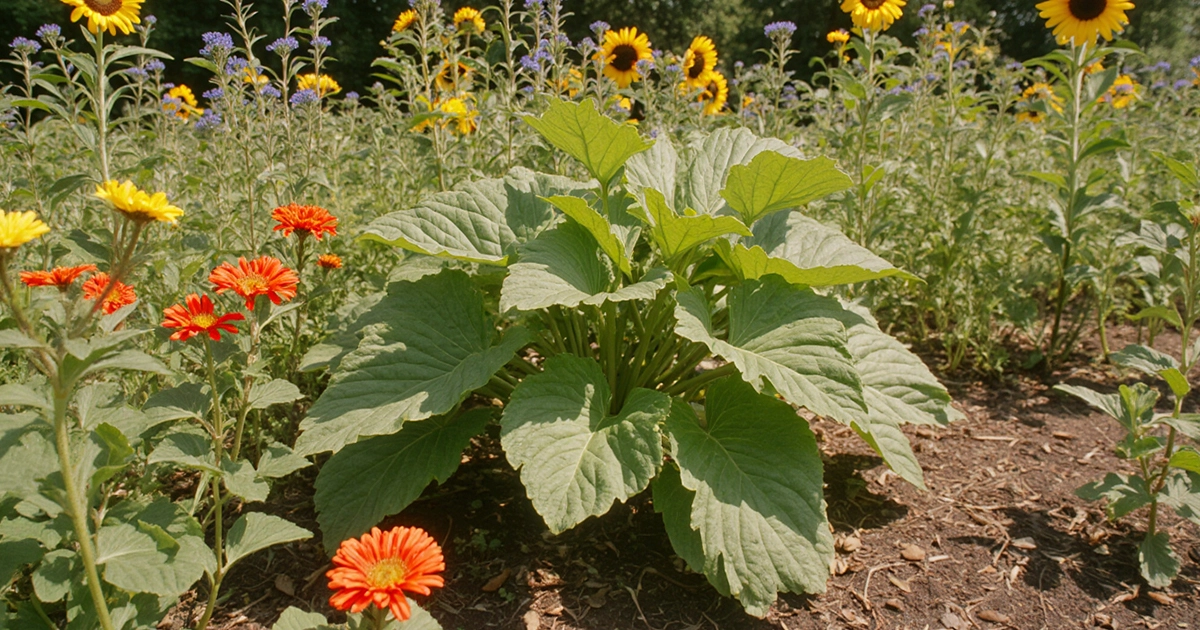
This is the superstar of pollination. Borage produces star-shaped blue flowers that refill with nectar almost instantly after a bee visits. This makes them irresistible to bees. By planting borage near your squash, you ensure a steady stream of traffic right past your zucchini flowers.
- Bonus: Borage is known as a “dynamic accumulator.” Its deep taproot pulls calcium and potassium from deep in the subsoil and makes it available to neighboring plants as its leaves decompose.SunflowersThese giants act like a neon “Open for Business” sign for pollinators. Because they are tall, they can draw bees from a distance who might otherwise fly right past your garden.
- Placement Matters: Plant sunflowers on the north side of your zucchini patch so they don’t block the sun. Alternatively, in very hot climates, plant them on the west side to provide dappled shade during the scorching afternoon hours, which can prevent your zucchini leaves from wilting.
Nitrogen Fixers (The Soil Feeders)
Bush Beans & Pole Beans
Zucchini are hungry. They require massive amounts of nitrogen to grow those huge leaves. Beans and peas are “legumes,” which have the unique ability to work with soil bacteria to pull nitrogen from the atmosphere and fix it into root nodules.
- The Strategy: Interplanting bush beans between your squash mounds provides a slow-release fertilizer that keeps the soil rich without the need for chemical additives.
The “Three Sisters” Planting Method Adapted
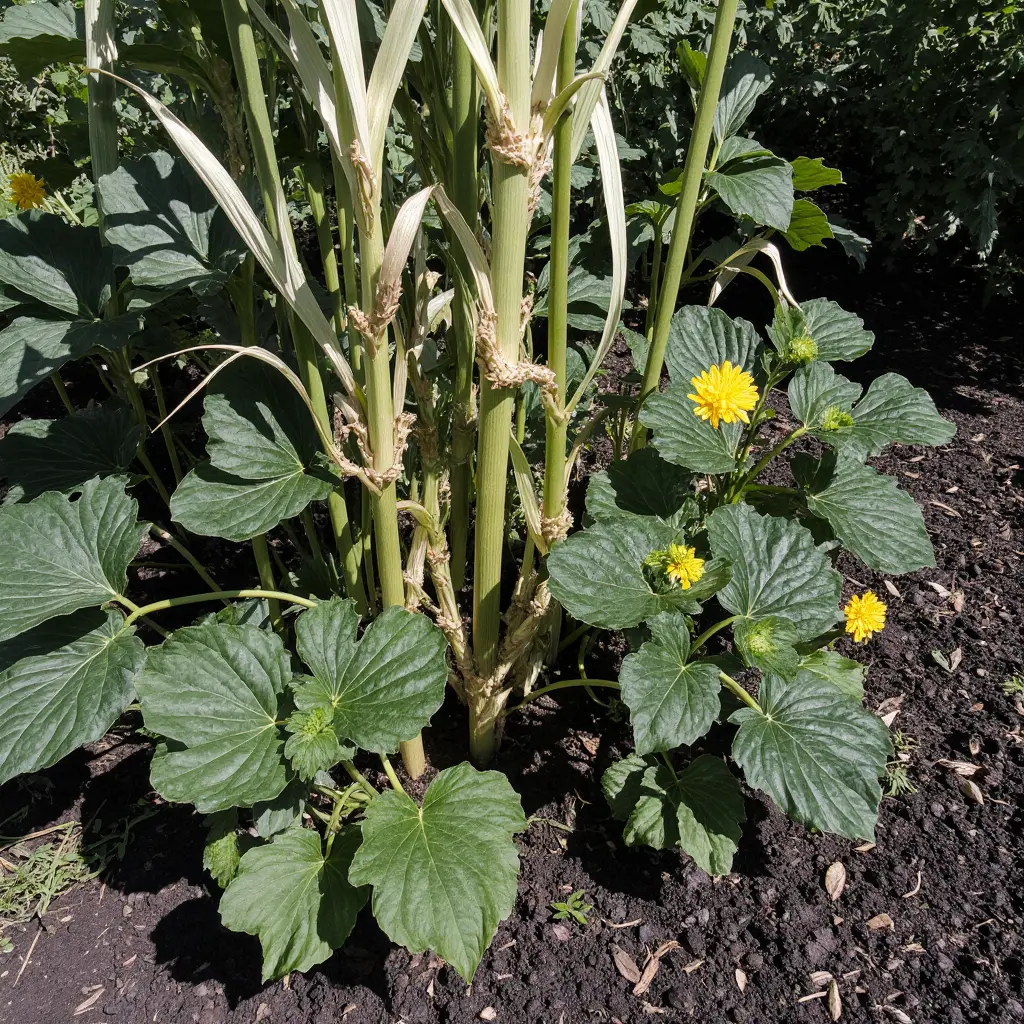
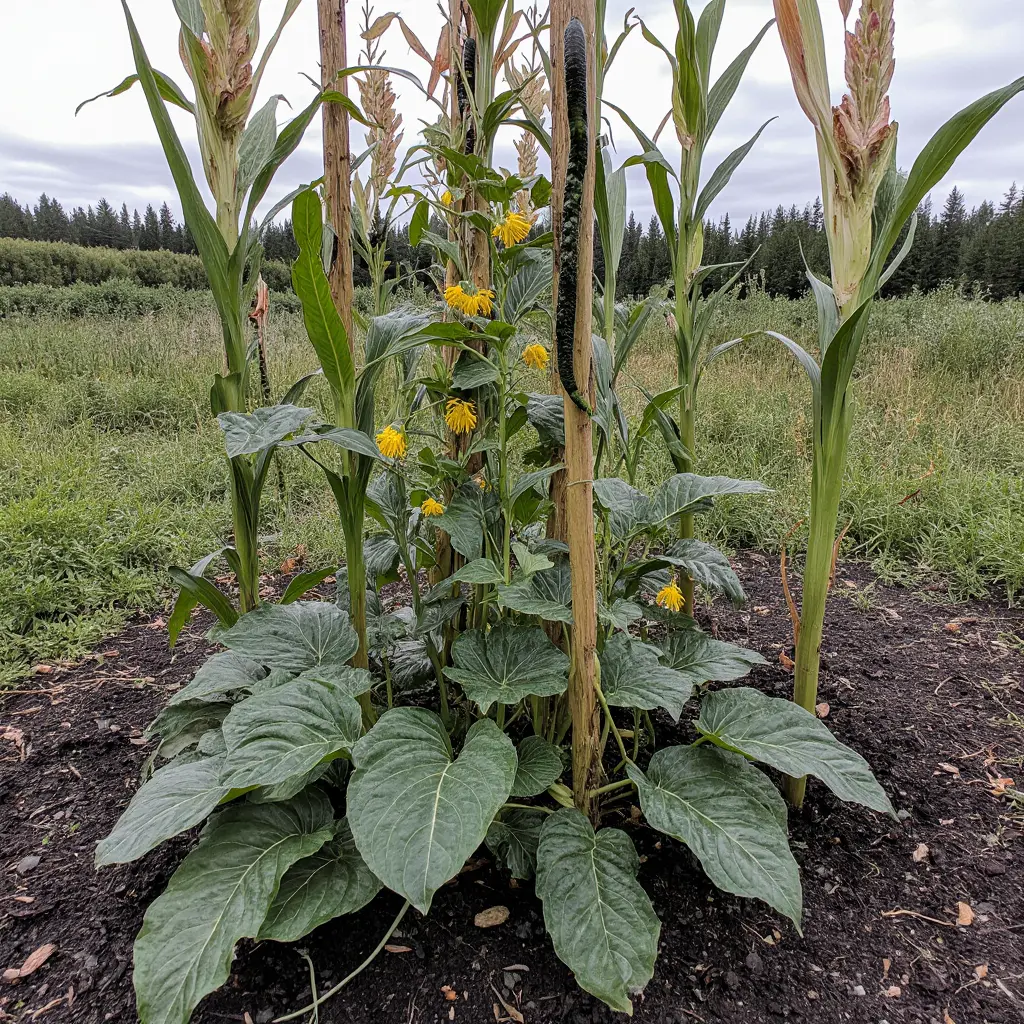
You cannot talk about zucchini companion plants without honoring the indigenous wisdom of the “Three Sisters.” This method, perfected by Native American agriculturalists, is the original companion planting guild. It typically uses winter squash, but it works beautifully with summer zucchini if adapted slightly.
The Trio: Corn, Beans, and Squash.
How it Works in Your Garden:
- The Support (Corn): You plant the corn first. As it grows tall, it provides a natural trellis.
- The Fixer (Beans): You plant pole beans at the base of the corn. The beans climb the corn stalks (saving you from building a trellis) and fix nitrogen in the soil to feed the corn and the squash.
- The Protector (Zucchini): You plant the zucchini around the perimeter of the corn and beans. The large, prickly leaves of the zucchini shade the soil. This keeps moisture in the ground (reducing your watering bill) and prevents weeds from germinating. Plus, raccoons and other critters hate walking through the prickly squash leaves to get to the corn.It is a perfect, self-sustaining system. If you try this, give the corn a head start of about 2-3 weeks before planting the beans and zucchini so it is strong enough to support the weight.
Essential Ingredients for Planting Success
Knowing which plants to pair is only half the battle. You also need to ensure the environment supports this biodiversity. You are essentially throwing a dinner party for plants—you need to make sure there is enough food for everyone.
Here is a checklist of “ingredients” to add to your soil to ensure your zucchini companion plants thrive rather than compete.
Table 1: The Companion Planting Ingredient Checklist
| Ingredient Category | Recommended Item | Purpose for Zucchini Guilds |
| Soil Builder | Aged Manure or Mushroom Compost | Zucchini are heavy feeders; this provides the base calories they need so they don’t starve out their neighbors. |
| Drainage Aid | Perlite or Vermiculite | Squash roots hate “wet feet.” This ensures water drains away quickly, preventing root rot in dense plantings. |
| Moisture Retainer | Straw or Shredded Leaves | A thick layer of mulch keeps the soil cool for the shallow roots of beans and corn, while keeping zucchini fruit off the wet dirt. |
| Fertilizer | Fish Emulsion (5-1-1) | A gentle, nitrogen-rich liquid feed. It boosts the leafy growth of both the squash and the companion herbs without burning them. |
| pH Balancer | Garden Lime (if acidic) | Squash and beans prefer a pH between 6.0 and 7.5. If your soil is too acidic, they cannot uptake nutrients, no matter how much you fertilize. |
Bad Neighbors: Plants to Avoid Near Zucchini
Just as there are best friends in the garden, there are also bitter enemies. Planting these near your zucchini can stunt growth, attract more pests, or spread disease.
Potatoes
Keep these two far apart. Both potatoes and zucchini are heavy feeders, meaning they will fight aggressively for the same nutrients in the soil. Worse, they are both susceptible to similar blights. If your potatoes get sick, your zucchini will likely follow suit within days.
Pumpkins & Other Squash
This might seem counterintuitive. Can’t family hang out together? In the garden, no.
- Pest Magnet: A huge block of pumpkins, zucchini, and melons is a giant target for pests. Break them up with flowers and herbs.
- Cross-Pollination: If you plan on saving seeds for next year, you cannot plant different squash varieties near each other. They will cross-pollinate, and next year’s seeds will produce weird, inedible hybrids.FennelFennel is the grumpy neighbor of the vegetable world. It releases a chemical that inhibits the growth of almost all other plants nearby. Keep fennel in a pot on the patio, far away from your vegetable beds.
Frequently Asked Questions About Zucchini Companion Plants
Can I plant tomatoes next to zucchini?
This is a common debate. Generally, yes, they can be friends. However, proceed with caution. Both tomatoes and zucchini are “heavy feeders,” meaning they deplete the soil rapidly. If you plant them together, you must be diligent about adding compost and fertilizer throughout the season. Also, ensure the zucchini leaves don’t grow so large that they block airflow around the lower tomato leaves, which can cause fungal issues.
How close should I plant zucchini companion plants?
Zucchini plants get massive—often 3 to 4 feet wide. You need to give them space.
- Small companions (Radishes, Carrots): Can be planted within the “drip line” of the leaves, about 12 inches from the main stem.
- Medium companions (Nasturtiums, Marigolds): Plant these 18-24 inches away so they don’t get smothered by the giant squash leaves.
- Large companions (Beans, Corn): Follow the spacing for the “Three Sisters” method, giving the squash the outer perimeter.
Do marigolds actually help zucchini?
Yes, but you have to plant the right kind. French Marigolds (Tagetes patula) are the most effective. Research suggests their root secretions deter nematodes, and their scent confuses aerial pests. Don’t just plant one; plant a drift of them for maximum effect.
What is the best companion for zucchini in containers?
If you are growing compact zucchini varieties in pots (like ‘Astia’ or ‘Bush Baby’), you have limited root space. Choose shallow-rooted companions. A trailing Nasturtium is perfect—it will spill over the side of the pot, looking beautiful and guarding pests, without fighting the zucchini for deep root space. Oregano is another great container companion.
Conclusion
Gardening is not about control; it is about cooperation. When you walk out to your garden next season, I don’t want you to see a battlefield where you are constantly fighting pests with sprays and powders. I want you to see a thriving community.
By carefully selecting the right zucchini companion plants, you are building a biological support system. The beans feed the soil; the borage calls in the air support (bees); and the marigolds and radishes stand guard as sentries against the invaders.
This season, do not just plant a seed and hope for the best. Plant a guild. Plant an ecosystem. When you are harvesting that fifth basket of glossy, perfect zucchini in August, you will know that nature did the heavy lifting for you.
Now, it’s time to plan. Which of these companions will you add to your seed order today? Grab your garden journal and sketch out your new, diverse planting bed.